What Should Someone Understand From a Quick Look at Your LinkedIn Profile?
Picture someone opening your profile after a message, application or introduction. They are trying to place you: what do you do, where does your experience fit and why might this conversation matter? You do not control how long they stay. You can make the first information they encounter easier to understand and support it with detail below.
Let the top section establish a clear direction
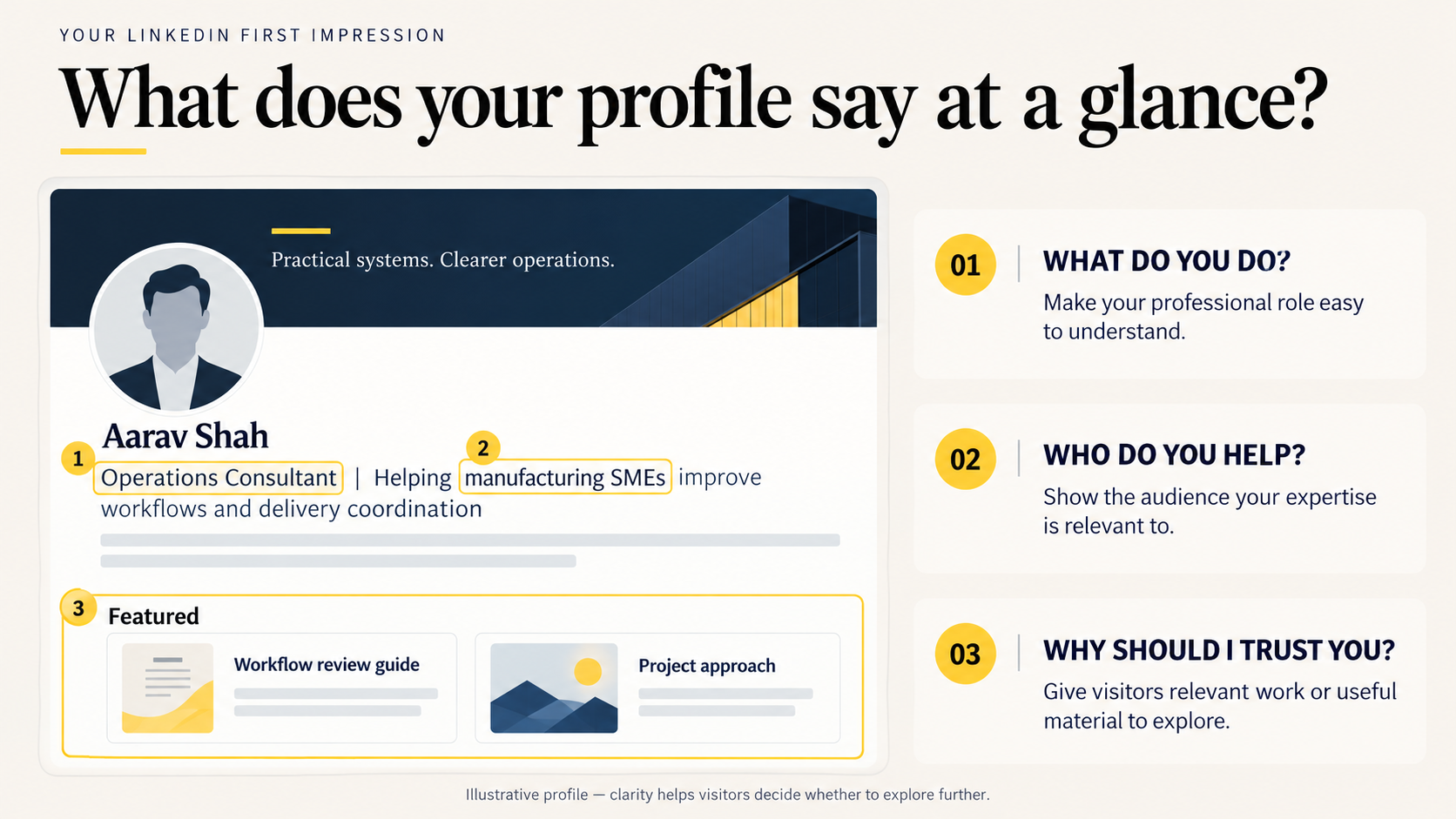
The photograph, banner, headline and current role should work together. Use a recognisable image and a headline that describes your field and focus. Avoid making the reader decode several broad titles before finding the useful information. A banner can add context, but it should not need to carry the explanation that the headline is missing.
Make the About opening worth continuing
Start with your current work and the people or situations it relates to. A working professional may explain an area of responsibility. A consultant may describe the problem the service addresses. Give the reader context before moving into career history. The opening does not need a dramatic claim to make the professional direction interesting.
Put evidence behind the first impression
Recent experience should help explain your contribution, scope and relevant skills. A suitable work sample or recommendation can add context where appropriate. Keep titles and dates accurate. Do not use a polished top section to suggest experience that the rest of the profile cannot support. Readers who continue should find a more complete version of the same story. Look for the point where the reader needs extra explanation, then improve that section before expanding.
Match the emphasis to the intended opportunity
A recruiter may be assessing role fit; a prospective client may be assessing a service. You can welcome both without presenting conflicting identities. Decide which direction matters most now and make it understandable. If the profile tries to speak equally about several unrelated offers, the visitor may not know what to ask you about.
Test the explanation without giving extra clues
Ask someone unfamiliar with your work to read the page and explain what they think you do. Do not introduce yourself first. Their answer can reveal unclear language or missing context. This is an editing exercise, not a scientific claim about recruiter behaviour. Use the feedback to improve the message, then review it when your work or professional goals change.