
How to Write a Consulting Case Study When You Cannot Name the Client
You have done useful consulting work, but the client cannot be named publicly. That does not mean the learning has no value. It does mean you need to decide what can genuinely be shared. A good case study protects the relationship while explaining the situation, your contribution and the outcome you are permitted to discuss.
In this guide
Start with permission, not anonymisation
Review the relevant agreement and approval requirements before drafting. Removing the company name does not automatically make the information available for publication. Ask which details can be used and who should approve the final version. If there is no suitable permission, explain your approach through a clearly labelled hypothetical scenario instead of presenting an invented engagement as real work. Give the client enough time to review the draft, rather than treating permission as a final formality.
Keep only the context needed to understand the problem
A sector description may be enough. Exact dates, locations, system details or a distinctive organisational change can make an unnamed client recognisable. Review the combination of details rather than checking each one in isolation. The reader needs enough context to understand your decision, not enough clues to identify the business.
Separate your contribution from the team’s work
Explain the scope of your role and the action you personally took. If a wider team delivered the project, make that visible. “Supported implementation planning” and “led the full implementation” are different claims. A precise account helps a future buyer understand what they could actually engage you to do.
Use evidence you can stand behind
A completed deliverable, an approved process improvement or a verified metric can all support the story. Do not add a percentage merely because case studies are expected to contain numbers. Distinguish an observed result from an intended benefit. If the outcome cannot be shared, explain the approved work and the professional learning without implying more than the evidence establishes.
End with the useful insight
Tell the reader what the situation reveals about your approach and when that expertise might be relevant. Keep the service invitation connected to the example. Save the approval record with the final draft so later edits respect the same boundaries. A trustworthy case study earns attention through a clear explanation of real work, rather than dramatic claims that make the client or contribution difficult to recognise.
Use this case-study structure
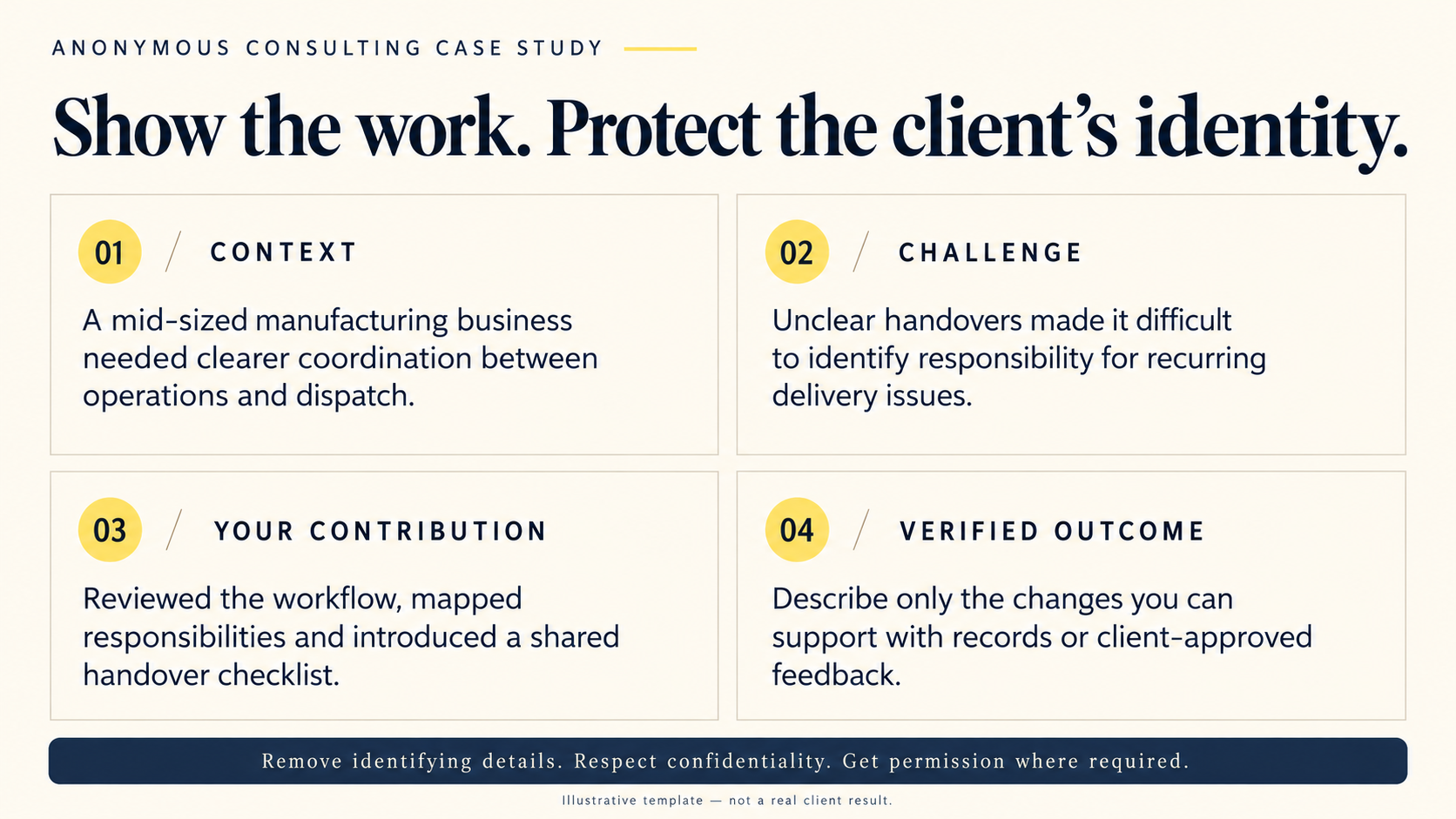
- Context: describe only the sector and situation needed to understand the work.
- Scope: state what you were engaged to handle and which responsibilities belonged to others.
- Action: explain the specific work you performed, using approved detail.
- Evidence: describe a verified deliverable or permitted result, and distinguish it from an expected benefit.
- Learning: explain what the example demonstrates about your approach.
- Review: confirm that the final wording, visuals and combination of details are appropriate for publication.
An illustrative example without invented outcomes
“An unnamed B2B services team needed a clearer handover between sales and delivery. My role covered documenting the existing handover and clarifying the information required at each stage. Working with the relevant team members, I developed a shared checklist and responsibility note. The example demonstrates how I structure discovery and translate unclear ownership into a practical deliverable.”
This is a hypothetical writing example. It does not report a real client engagement, measured improvement or completed Elevare Me project. A real version would need accurate context, permission and evidence for every outcome you include.
Run an identification check before publishing
Read the draft for combinations of details: industry, city, dates, specialist systems, organisational changes and unusual incidents. An individual detail may seem harmless while the combination makes the client obvious. Review screenshots as carefully as the text; names, account details and internal labels can appear in the background.
Keep the approved version and the relevant permission record together. If you later turn the story into a carousel or website section, review the new format too. Editing a visual or shortening a caption can change the meaning or reintroduce identifying information.