
A 13-Week LinkedIn Plan You Can Actually Maintain
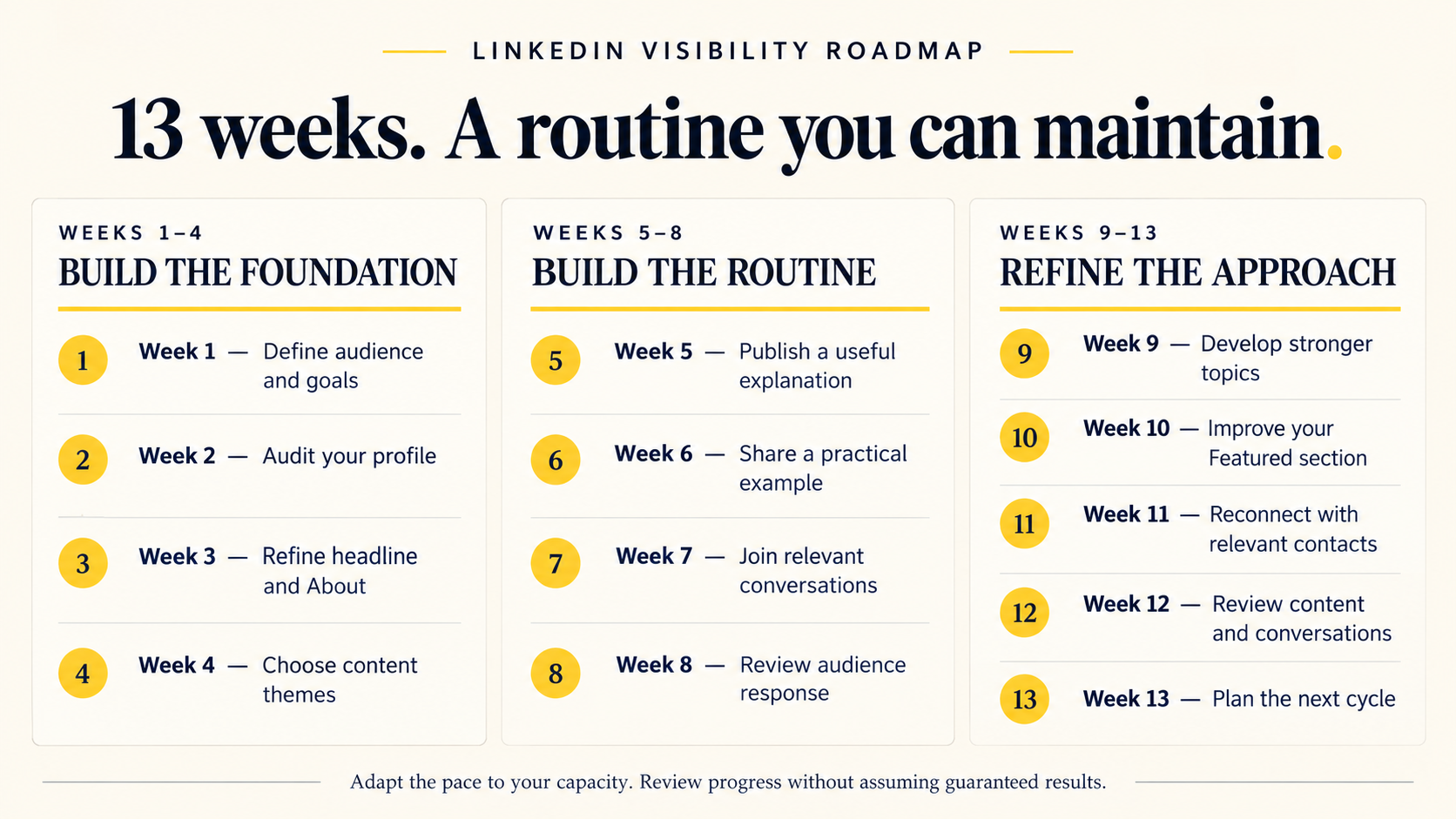
Most LinkedIn plans look manageable until work gets busy. Then the calendar slips, ideas dry up and the profile stays untouched for another month. A thirteen-week plan gives you enough structure to build a routine without pretending you can predict the outcome. Treat it as a working plan, with space to learn and adjust.
In this guide
Weeks 1–2: decide what you want to be known for
Choose an audience and a professional focus. A consultant might want to explain a specialist service; a working professional might want stronger visibility within a role family. Write down the problems you can discuss from experience. Then check whether your headline, About section and recent experience support that direction. An unclear profile makes every later content decision harder.
Weeks 3–5: find a repeatable source of ideas
Use questions from your work, recurring misunderstandings and decisions you can explain publicly. Create a small bank of topics instead of waiting for inspiration on publishing day. Pick a posting rhythm you can sustain. A useful post each week, supported by thoughtful participation, is a more workable starting point than a daily target you repeatedly miss.
Weeks 6–9: notice who responds
Pay attention to the people asking questions, visiting your profile where that information is available, or starting conversations. Are they relevant to your goal? Save their questions as future topics. Do not change the entire strategy because one post performs unusually well or badly. Look for patterns across several pieces of content and the conversations around them. Keep a short note of the original goal so each review has a clear reference point for decisions.
Weeks 10–13: make the next decision
Review what became easier, what still takes too long and which subjects attracted useful attention. Keep the strongest themes and rewrite weak explanations. If approvals are delaying everything, improve the review process. If the audience is wrong, revisit positioning. More content is not automatically the answer to either problem.
Build a routine that survives a busy week
Reserve a small input window, keep notes between sessions and know who approves each draft. Never use confidential employer or client information simply because it would make an interesting post. At the end of thirteen weeks, you should have a clearer message and evidence for your next decisions. The calendar organises the effort; it cannot guarantee visibility or customers by a particular date.
A working plan with tangible outputs
| Stage | Work to complete | Output to review |
|---|---|---|
| Weeks 1–2 | Define audience and professional direction; review the profile | A positioning note and priority profile changes |
| Weeks 3–5 | Build topic themes and a realistic drafting routine | A small bank of useful ideas and approved drafts |
| Weeks 6–9 | Publish agreed work and participate in relevant conversations | Questions, audience observations and topics worth developing |
| Weeks 10–13 | Review the pattern and improve the next cycle | A decision about themes, scope and the working process |
Create an input bank before you need the next post
Use four headings in a private note: questions people ask, misunderstandings you often correct, decisions you can explain and material approved for public use. Add a sentence of context when an idea appears. Do not save confidential client details merely because the example is useful.
During your input session, choose the idea with the clearest audience and takeaway. A writer should know what the post needs to explain before deciding how to make the opening engaging. Keep unused ideas for later, rather than forcing them into the week’s calendar.
Give the weekly review a short agenda
Ask three questions: did the planned work happen, did the professional message remain accurate, and what useful response did we learn from? Keep operational problems separate from content problems. A missed approval requires a working-process decision; audience confusion requires an editorial decision.
At the end of the period, compare the current profile and content themes with the starting positioning note. Retain useful changes and identify one or two priorities for the next cycle. The plan is successful as a management tool when it helps you make clearer decisions, even though no timetable can promise a specific commercial outcome.